
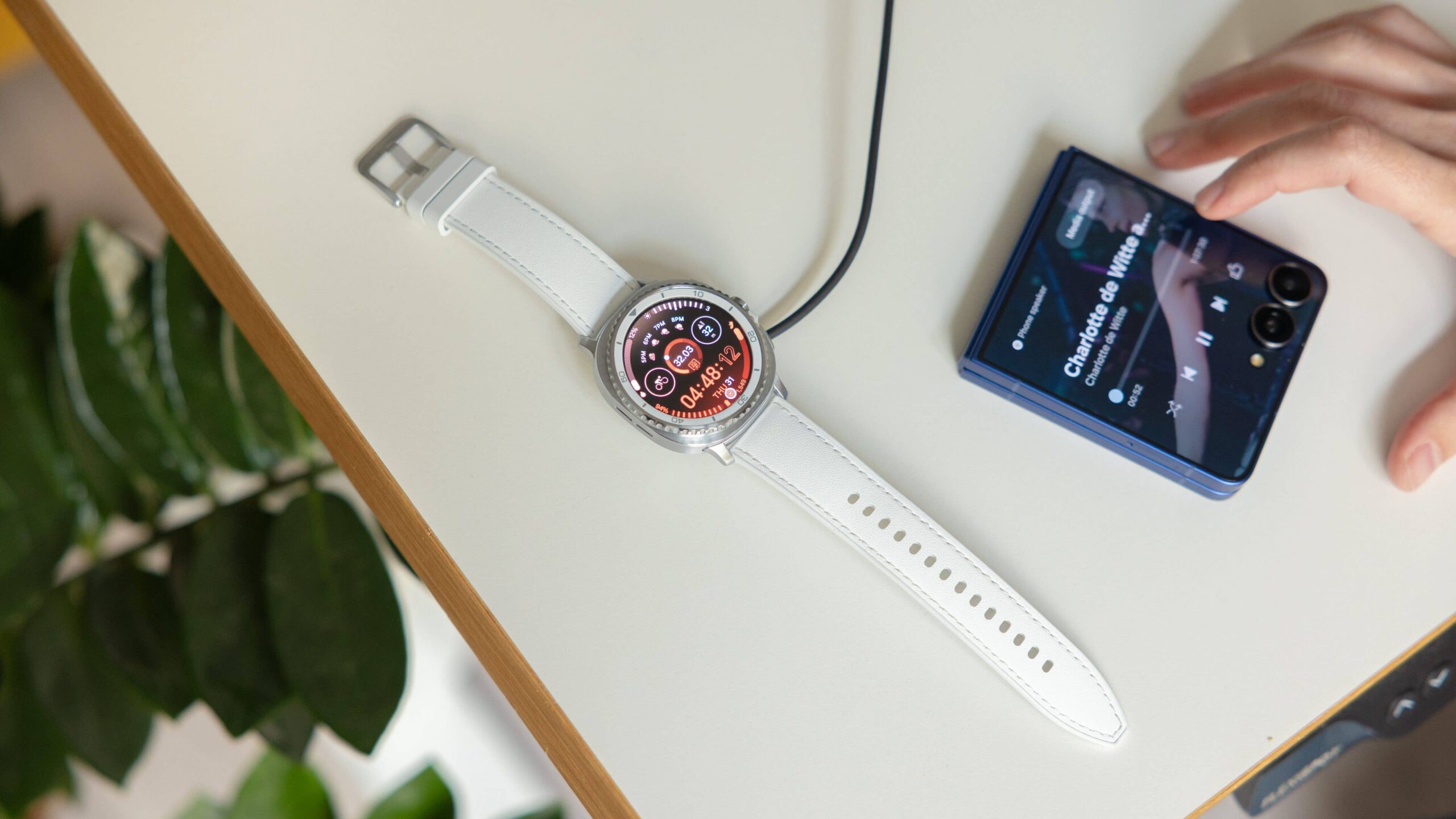
Samsung is ditching its own chips for the next Galaxy Watch. By adopting Qualcomm’s advanced chip, the company aims to finally solve the battery dilemma. Will the Galaxy Watch 9 sports the longest battery life ever on its smartwatches?
Samsung’s Galaxy Watches are among the most advanced wearables on the market, but one issue the company has yet to fully address is their meager battery life. While endurance has slightly improved in recent generations, it has yet to catch up to the competition. However, with the introduction of the new Snapdragon Elite-branded chip, Samsung could finally deliver the endurance upgrade users have been waiting for.
At MWC 2026, Qualcomm unveiled a new range of wearable processors called Snapdragon Wear Elite. This new silicon is designed to power future smartwatches as well as a new wave of AI devices, such as pendants and pins. Notably, this “Elite” branding now aligns the wearable chips with Qualcomm’s high-end mobile SoC range.
As expected, the chipmaker is highlighting significant processing and AI upgrades. Beyond raw power, the Snapdragon Wear Elite promises a major leap in efficiency. The first generation will be manufactured on a 3nm process, a notable improvement over the 4nm process used in the Snapdragon W5 Gen 2.
Watches That Last Days Between Charges
The 3nm process puts the chip on par with Samsung’s own Exynos W1000 found in the Galaxy Watch 8 (review). However, the Snapdragon counterpart could still outshine it in both speed and efficiency departments.
Qualcomm claims the new chip offers 30% longer runtime compared to the current generation of Snapdragon Wear processors. While it remains to be seen how this translates to real-world use, the figure is highly promising. Additionally, the chip enables significantly faster charging, promising a 50% charge from flat in just 10 minutes.
Full technical specifications for the processor have not yet been published, but the chip is reportedly configured with a penta-core CPU. This setup features a high-performance primary core supported by four efficiency cores. This architecture allows the system to allocate lighter background tasks to the efficiency cores while the primary core handles intensive processing.
On-Device AI Capabilities for Wearables
Qualcomm is also positioning this as the first wearable silicon to feature a dedicated NPU (Neural Processing Unit). This enables advanced, on-device artificial intelligence for a truly personalized AI experience, which is a feature you can find yet on Wear OS smartwatches.
In terms of connectivity, the chipset supports low-power 5G, Bluetooth 6.0, and satellite-based communication.
Samsung has confirmed that its next Galaxy Watch lineup will be equipped with the Snapdragon Wear Elite SoC. This is expected to include the Galaxy Watch 9 series and the Galaxy Watch 2 Ultra, likely to be announced in July or August. Other Wear OS brands, including Motorola and Xiaomi, are expected to follow suit.
How much longer should a smartwatch battery last to meet your needs? We want to hear your opinion in the comments below.
We mark partner links with this symbol. If you click on one of these links or buttons–or make a purchase through them–we may receive a small commission from the retailer. This doesn’t affect the price you pay, but it helps us keep nextpit free for everyone. Thanks for your support! Prices are based on the date of publication of this article and may be subject to change.